Piracy thrives where services fail
There are three editions of my book in circulation: two English editions of Mastering Vim (the second being a complete rewrite), and a Japanese translation by the amazing Masafumi Okura. And I don’t really mind if my book gets pirated.
Yeah, piracy isn’t legal, yada-yada. But if $30 is too much right now and your library doesn’t have a copy to spare - I won’t blame you for torrenting it. Here’s my full permission, I hope you enjoy the result of my sweat, tears, and deadline anxiety.
Amazon is convenient, but you don’t own your Kindle books. They can be deleted or changed at any moment. Amazon has literally changes book covers after purchase, especially when books get a movie release. Ugh. Meet DRM (Digital Rights Management) - the technology that ensures you’re renting, not buying.
Packt, publisher of Mastering Vim, does offer DRM-free PDFs. But there’s no good PDF syndication ecosystem. No convenient library management. No sync across devices. You’re not really missing out.
Growing up in Russia, I pirated video games. Not out of principle, but pragmatism. Fan translations arrived six months before official ones. They were better too - localizers who actually played the games versus outsourced rush jobs. This was different kind of piracy, too - a guy on a corner selling pirated CDs at a market-appropriate rate.
I stopped in 2011 - already after I moved to the United States. Not because of some moral awakening, but because I learned about Steam. Cloud saves, achievements, automatic updates. The service became worth paying for. Music followed the same path - Spotify and YouTube Music (which I like because our family pays for YouTube Premium) made piracy pointless.
Video streaming went backwards. Netflix was the Steam moment for TV - everything in one place, reasonably priced. I loved our Netflix subscription, it felt oh-so-magical. Now? Eight subscriptions to watch your shows, content vanishing mid-season, regional restrictions. I watch a handful of shows or movies each month, and I once calculated how much I would have to take in subscription costs if I didn’t strategically sign up and cancel for periods when I want to watch my favorite shows. Over a $1,000 a year. Screw that.
I, of course, don’t pirate, not do I condone piracy. But I do use Jellyfin to organize my legally owned media library. One interface, no disappearing content, works offline. It’s simply a better experience than juggling Disney+, Netflix, HBO Max, Paramount+, Apple TV+, and whatever new service launched this week.
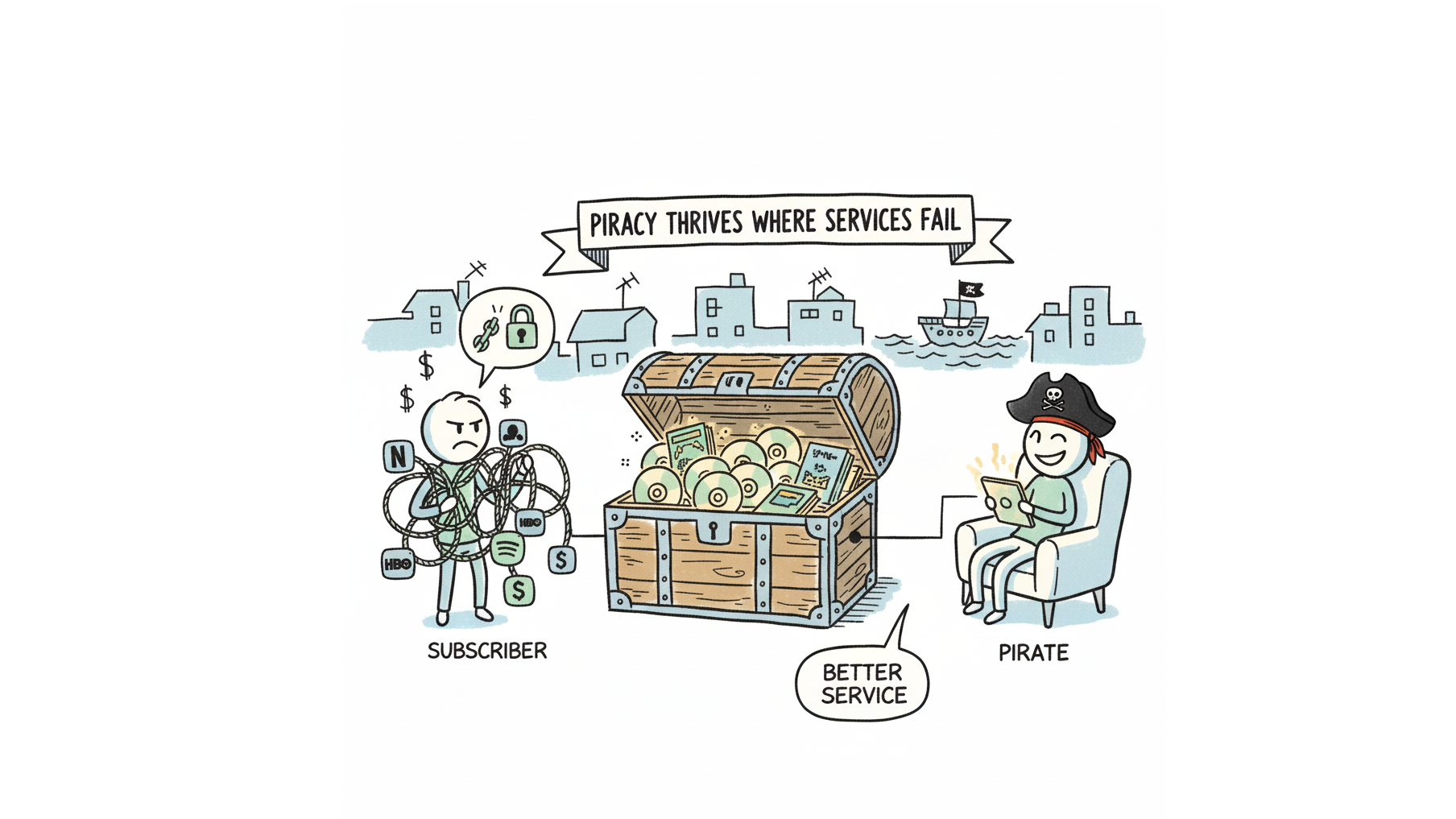
Piracy isn’t about price - it’s about service. Steam proved gamers will pay. Spotify proved music fans will pay. But fragment the market, add restrictions, remove content randomly, make legal options worse than illegal ones?
Don’t be surprised when people choose the better experience.